Birman Cat Love Vector
First Impression: Sweet, Soft, and Instantly Recognizable
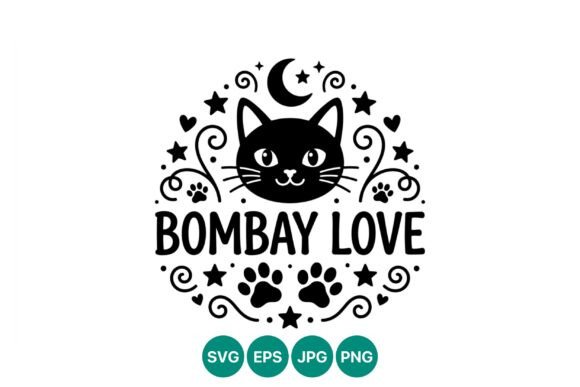
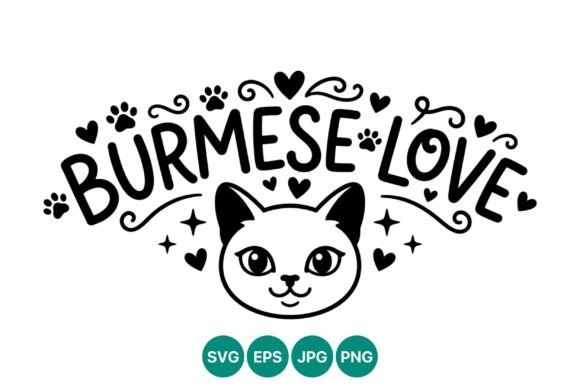
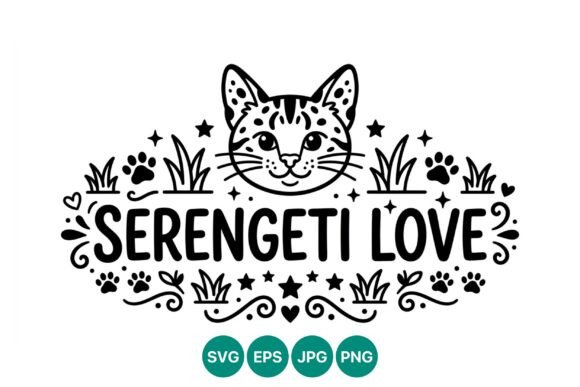
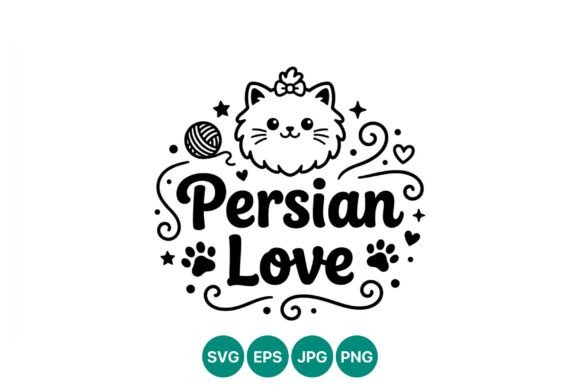
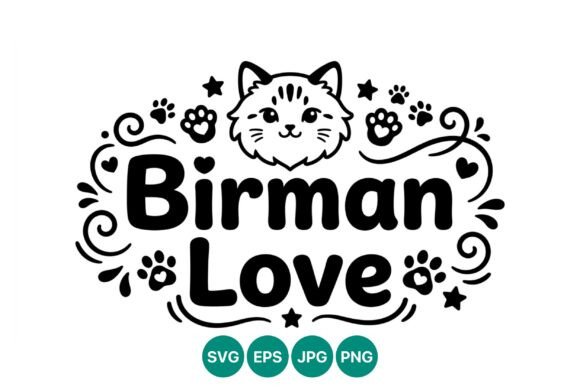
Opening the ZIP folder for Birman Cat Love Vector, I immediately felt that familiar designer pause — the one where you know whether a design will translate well to thread before you even load it into your embroidery software. This is clean black-and-white vector art, not a photo or a heavily textured illustration. The Birman cat face sits front and center: gentle eyes, soft muzzle curve, subtle ear shape — all rendered with confident line work and just enough detail to read clearly at 3–4 inches wide. Around it, paw prints, stars, hearts, and delicate swirling lines create rhythm without clutter. “birman love” appears in friendly, rounded lettering — not too thin, not overly decorative. It’s warm, affectionate, and quietly sophisticated. Not cutesy overload. Not clinical minimalism. Just right for a handmade product that feels personal but polished.
Where It Shines: Real Projects That Feel Like Gifts
Last week, I prepped a small-batch run of organic cotton tote bags for a local pet boutique — each one embroidered with a different cat breed motif. Birman Cat Love Vector was my top pick for the Birman-themed bag. Why? Because when stitched on medium-weight canvas with good tear-away stabilizer and matte poly thread, the design held its charm: the cat’s face stayed expressive, the swirls flowed smoothly, and the text remained legible without looking stiff. Customers responded instantly — especially cat lovers who recognized the Birman’s signature points and sweet expression. It worked equally well on a lightweight baby onesie (with light cutaway stabilizer) and as an embroidered patch on a denim apron for a cat café pop-up. That versatility — from nursery decor to boutique apparel — is rare in single-design graphics. It reads beautifully at 2.5 inches (perfect for a cap front or pillow corner) and scales cleanly up to 5 inches for a tea towel or sweatshirt chest placement.
What to Watch For: Embroidery Realities You Can’t Ignore
That said, Birman Cat Love Vector isn’t magic — and assuming it is will cost you time, thread, and client trust. First: the swirls and small hearts are elegant in vector form, but in stitch, they demand attention. On stretchy fabric like ribbed knit tees, those curves can pucker if stabilizer isn’t layered correctly. Tiny paw prints near the outer edge? They’ll vanish on dark fabric unless you use high-contrast thread (white or silver) and test stitch density first. The “love” in “birman love” is small — fine for a tote or pillow cover, but avoid placing it on curved surfaces like baseball caps unless you’re using a low-profile satin stitch and reducing fill density by 15–20%. Also, avoid dense fill-stitch areas over seams or hems; the design’s gentle flow works best on flat, stable zones.
Design Integrity in the Finished Product
What makes Birman Cat Love Vector stand out isn’t just cuteness — it’s how it supports your brand’s credibility. When customers see this on a hand-finished item, they don’t think “generic clip art.” They sense intention: the thoughtful spacing, the balanced negative space around the cat’s face, the way the stars echo the shape of the ears. That perception lifts perceived value — especially for Etsy sellers pricing personalized gifts or small shop owners curating boutique merchandise. I’ve seen buyers comment directly: “This looks custom-made, not printed.” That’s the power of smart illustration paired with clean vector structure. As a machine embroidery design, it avoids the pixelation or jagged edges that plague low-res PNGs. As an embroidery file, it gives you room to adjust stitch types — swap fill for running stitch in the swirls, use satin stitch for the heart outlines, simplify the paw prints into single-outline motifs for tiny patches.
Practical Designer Notes Before You Stitch
- Always test first — stitch Birman Cat Love Vector on scrap fabric matching your final project’s weight and stretch.
- Check thread color contrast — especially for the fine swirls and lettering. Light gray thread on oatmeal linen? Beautiful. Same thread on charcoal cotton? Nearly invisible.
- Review stitch density — vector files don’t auto-optimize for embroidery. Open the design in your software and verify no areas exceed 12,000 stitches without justification.
- Confirm hoop size — the layout fits comfortably in a 4x4 hoop at standard scale, but double-check before digitizing for larger formats.
- Inspect small details — zoom in on the cat’s eyes and paw print tips. If they’re under 1.5mm in vector, they’ll need simplification or outline reinforcement in embroidery.
- Test black-and-white mockups — this design lives in monochrome, so preview it on both light and dark backgrounds before committing to thread colors.
- Use proper stabilizer — medium cutaway for knits, tear-away for stable wovens, fusible for lightweight linens.
- Verify licensing — since this is sold as a digital embroidery file, confirm whether commercial use (e.g., selling finished embroidered totes on Etsy) is permitted before launching your craft business product.
Final Thought: A Design That Earns Its Place
Birman Cat Love Vector doesn’t shout. It invites. It’s the kind of Illustrations asset that makes your sweatshirt embroidery feel like a quiet inside joke between you and the wearer — or the kind of Graphics choice that turns a simple kitchen towel into a cherished holiday gift. It respects the craft: no unnecessary complexity, no visual noise, no forced trends. Just warmth, clarity, and real-world adaptability. Whether you’re stitching for clients, building a small shop product line, or creating personalized gifts for friends, this design earns its place not because it’s trendy, but because it works — thoughtfully, consistently, and with quiet confidence.