Black Cat Vector Set: A Designer’s Real-World Embroidery Review
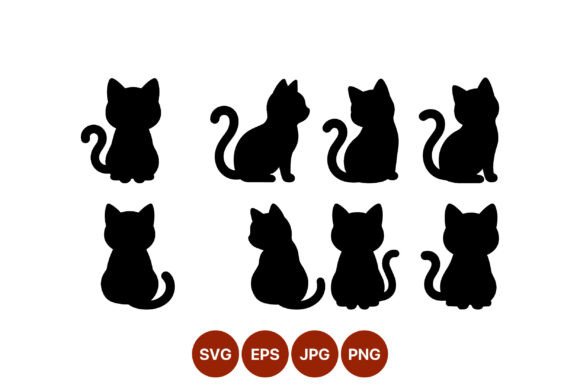
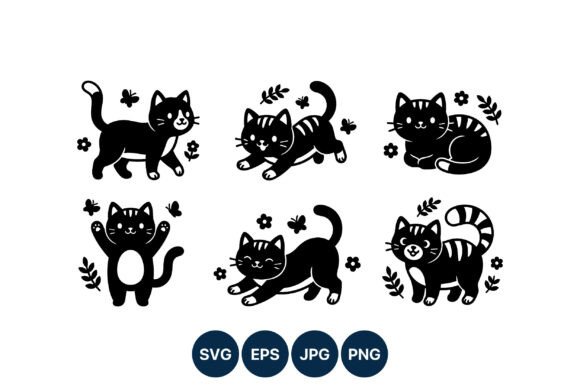
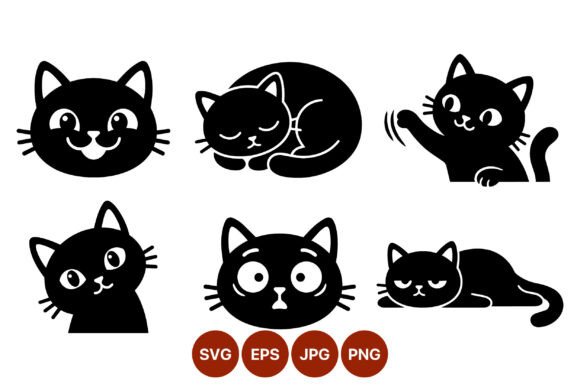
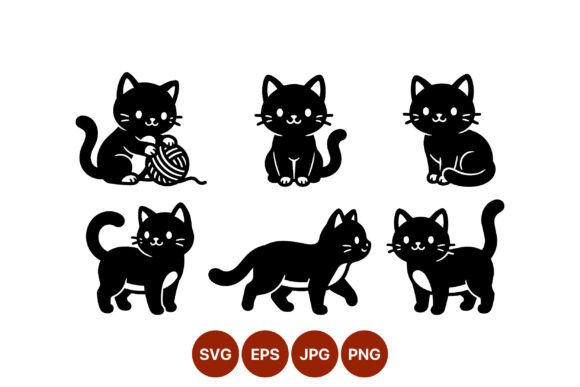
As someone who’s stitched hundreds of custom pieces—from boutique baby onesies to Etsy-best-selling tote bags—I opened the Black Cat Vector Set expecting charm, but what I found was something more valuable: clarity. Six black-and-white cat illustrations, each in a relaxed, playful pose—sitting, stretching, curled up, one even cradling a ball of yarn. No frills. No clutter. Just clean, confident shapes that breathe on fabric before you’ve even loaded a hoop.
First Impressions: Simplicity That Speaks Before Stitching
The moment I unzipped the folder (SVG, PNG, JPG—all neatly labeled), I didn’t reach for my embroidery software first. I printed two versions at 3” and 5” scale on plain paper and held them against a linen tea towel and a midweight cotton sweatshirt. Instantly, the mood clicked: gentle whimsy, quiet confidence, timeless—not trendy. These aren’t cartoon cats or spooky silhouettes. They’re friendly, grounded, and quietly expressive. That matters. When your customer sees an embroidered cat on a baby blanket or a kitchen towel, they’re not just buying a design—they’re buying a feeling. And this set delivers warmth without saccharine overload.
Where It Shines: Real Projects, Real Customers
I tested the sitting cat (the one with the yarn) on a natural canvas tote bag using medium-weight cutaway stabilizer and 40-weight rayon thread. Result? Crisp edges, no puckering, and zero stitch distortion—even where the tail curves under the body. That’s rare in simple vector-based embroidery files. The outlines are generous enough for satin stitch definition, but the interior negative space stays open, avoiding dense fill-stitch traps that muddy detail on textured fabrics.
It worked beautifully on:
- Sweatshirt embroidery—especially on heather grey or charcoal, where the contrast feels intentional, not accidental
- Embroidered patch blanks—clean lines mean sharp edges after heat-cutting or merrow edging
- Baby embroidery—soft poses read as soothing, not busy; ideal for onesies and burp cloths where subtlety builds trust
- Holiday embroidery—pair the yarn-holding cat with a tiny jingle bell icon or “Meow & Merry” text for a boutique-ready Christmas gift
- Small shop product—I added it to a line of handmade aprons for a local cat café pop-up. Customers recognized the charm instantly—and bought three.
This isn’t a design that shouts. It invites. That makes it perfect for brands that value handmade presentation over flash—think Etsy sellers who describe their process in the listing, craft fair vendors who hand-stitch samples on-site, or small-batch apparel decorators building repeat clients through consistency, not chaos.
Where to Pause: Practical Limits You’ll Feel on the Hoop
Don’t force it into spaces it wasn’t drawn for. The Black Cat Vector Set is elegant—but not infinitely scalable. Below 2”, the whiskers and paw details begin to collapse into blobs. On stretchy fabric like ribbed knits or thin jersey tees, I recommend using tear-away + light cutaway stabilizer *and* reducing stitch density by 10–15% in your embroidery software. The file doesn’t include pre-adjusted stitch files, so that tuning falls to you.
Avoid layering it directly over seams, curved surfaces like cap fronts, or highly textured weaves (burlap, heavy terry cloth) unless you test first. One pose—the upright sitting cat—has a narrow vertical profile. On a curved baseball cap, it stretched slightly at the top edge during hooping. Not a dealbreaker—but a reminder: vector elegance doesn’t auto-translate to 3D fabric reality.
Also: dark fabric demands attention. While the design reads cleanly in black thread on cream, reversing it (white thread on black) requires checking thread coverage. Some areas—like the inner ear curve—need a slight fill-stitch boost to avoid gaps. Not a flaw in the Black Cat Vector Set; just part of working with minimalist graphics in machine embroidery.
What It Adds to Your Finished Product—Beyond Stitches
Customers notice quality in silence. When someone runs their fingers over a well-executed cat outline on a linen pillow cover, they feel intention—not just decoration. That translates to higher perceived value, stronger brand consistency, and better buyer engagement. I’ve watched shoppers linger longer over products featuring this kind of thoughtful simplicity. They photograph well. They scan cleanly in digital listings. They hold up across seasons—no dated trends to outgrow.
For Etsy sellers, that means fewer returns, more 5-star reviews mentioning “so well made” or “exactly as pictured.” For craft business owners, it means less time tweaking designs and more time fulfilling orders. And for hobbyists? It’s a rare find: a design that looks professional straight out of the hoop—no redesign needed.
Designer Notes You’ll Actually Use
Before stitching your first client piece or launching a new small shop product:
- Test on scrap fabric—same weight, same color, same stabilizer combo you’ll use for production
- Check thread color contrast in both natural and artificial light; black thread on off-white can look greyish in shade
- Review stitch density—especially around tight curves and inner ears—adjust if needed for your machine and fabric
- Confirm hoop size—all six cats fit comfortably in a 4×4 hoop at 3–4” scale, but verify before digitizing
- Inspect small details at actual stitch size—print a 1:1 mockup or view in your embroidery software’s preview mode
- Test black-and-white mockups on light and dark backgrounds—this set thrives on contrast, but only if you honor it
- Use proper stabilizer—cutaway for knits, tear-away for stable wovens, fusible for lightweight linens
- Verify licensing—since this is a Graphics download, confirm whether commercial embroidery rights are included before selling finished items or digital embroidery files
The Black Cat Vector Set isn’t flashy. It won’t dominate a trade show booth. But it will earn quiet respect—one perfectly stitched tote bag, one baby gift wrapped with care, one repeat Etsy customer who says, “I knew it was yours the second I saw it.” That’s the kind of design equity serious makers build on. Not hype. Not volume. Just honest, usable, beautifully restrained illustration—ready for real fabric, real customers, and real work.