Plush Paw Mood Cat Vector
A Smiling, Stitch-Ready Companion for Handmade Charm
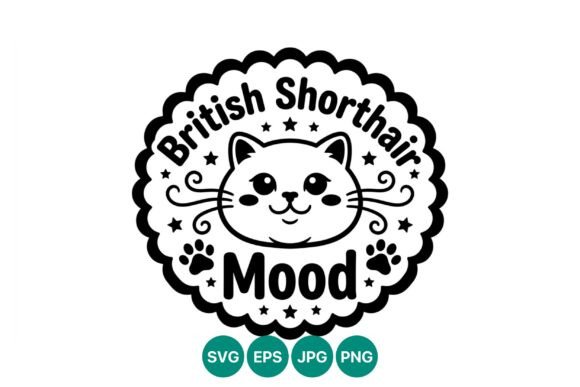
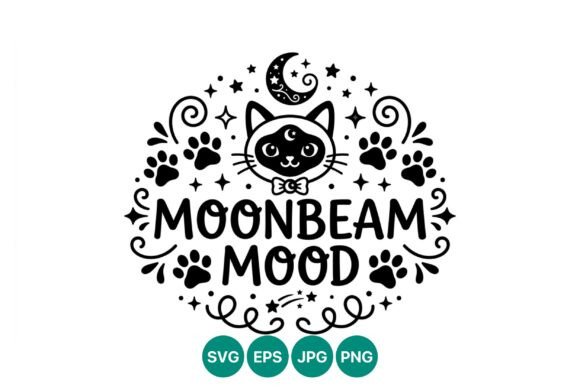
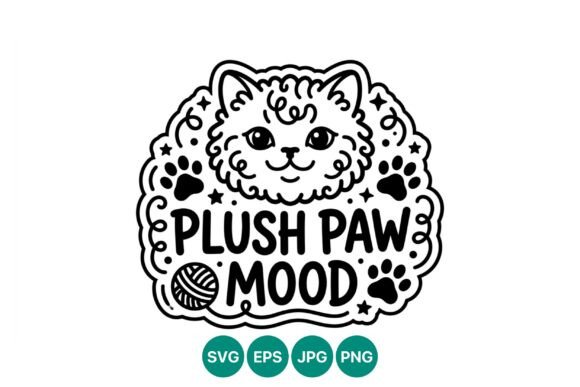
First impression? Warmth. Not the kind that comes from over-saturated color or busy detail—but the quiet, inviting warmth of a well-loved plush toy resting on a sunlit windowsill. Plush Paw Mood Cat Vector lands with gentle confidence: a black-and-white smiling cat face, soft-edged and round as a sigh, cradled by paw prints, tiny stars, and a coiled yarn ball. The hand-lettered “plush paw mood” curls playfully beneath—neither too tight nor too loose, just right for stitching without losing its handmade soul.
Where This Design Naturally Lives (and Thrives)
I recently tested Plush Paw Mood Cat Vector as the centerpiece for a custom embroidered cotton tote bag—intended for a local baby boutique’s spring collection. It worked beautifully: the clean vector lines translated into crisp satin-stitched outlines, the cat’s cheeks held subtle fill-stitch texture without overwhelming the fabric, and the yarn ball added just enough visual interest to anchor the composition. Customers responded immediately—not just to the cuteness, but to how *real* it felt stitched, not printed. That’s the quiet strength of this design: it reads as intentional, tactile, and human-made.
It’s equally at home on a linen tea towel (where the stars and paws become delicate running-stitch accents), a lightweight sweatshirt (the open layout breathes across knit texture), or a baby onesie (scaled down, the simplified features stitch cleanly even in 4-inch hoops). As an embroidered patch? Yes—especially for craft fairs or Etsy listings where shoppers value cohesive, story-driven design assets. The black-and-white base makes thread color selection intuitive, and the balanced negative space keeps it legible at small sizes.
Real Embroidery Considerations—Not Just Theory
Let’s be practical: no vector art is embroidery-ready out of the gate—and Plush Paw Mood Cat Vector is no exception. Its charm lies in simplicity, but that doesn’t mean zero prep. Here’s what I watched for:
- Hoop size & density: The full layout fits comfortably in a 5x7 hoop, but if you’re stitching on a curved surface like a cap or a toddler’s beanie, consider simplifying the outer paw prints or stars—dense fill areas near edges can pucker on stretchy or thin fabric.
- Fabric texture matters: On terry cloth towels or heavy fleece, the yarn ball’s fine curves softened slightly in stitch-out. A light tear-away stabilizer helped; for ultra-soft bamboo knits, I added a layer of cutaway. Always test on scrap first—especially with baby items or frequent-wash products like kitchen towels.
- Lettering clarity: The hand-lettered phrase holds up well at 2.5" wide, but below 1.75", the lowercase “a” and “p” risk blending. For caps or tiny pillow tags, I’d recommend using only the cat + one paw print as a standalone motif—or reworking the text in your embroidery software to increase letter spacing.
- Dark fabric contrast: Since this is black-and-white vector art, you control thread choice. On charcoal sweatshirts, white or cream thread gives soft contrast; on navy, a warm ecru reads more organic than stark white. Avoid matching thread to background—it disappears. Always mock up in grayscale first.
What This Design Gives Your Craft Business—Beyond Cuteness
For Etsy sellers and small shop owners, Plush Paw Mood Cat Vector isn’t just another illustration—it’s a brand-aligned touchpoint. Its playful-but-polished tone supports nursery decor, handmade gift sets, or cozy apparel lines without leaning into kitsch. Customers notice when embroidery feels considered, not copied. This design invites personalization (“Add a name below the yarn ball?”) and scales naturally across product types: same motif, different context—pillow cover, apron pocket, holiday ornament backing.
It also builds trust. When buyers see consistent line weight, thoughtful spacing, and motifs that actually *stitch* (not just look good on screen), they perceive higher craftsmanship—even before touching the finished product. That perception translates directly to perceived value, repeat purchases, and word-of-mouth referrals among parent groups, craft communities, and boutique buyers.
Designer Notes You’ll Actually Use
Before cutting thread or loading your machine:
- Check your ZIP folder—confirm it includes clean vector paths (AI/EPS/SVG) and not raster-only files. You’ll need editable vectors to resize without quality loss.
- Test stitch the full design on scrap fabric matching your final project—same stabilizer, same thread, same tension.
- Review stitch density in the cat’s face and yarn ball. If your machine struggles with tight fills, reduce density by 5–10% in those zones.
- Compare mockups on light and dark backgrounds. Does the composition still balance? Does the lettering pop?
- Verify licensing: since this falls under Illustrations and Graphics, confirm whether commercial use (e.g., selling embroidered totes on Etsy) is permitted—and whether you may resell the digital embroidery file itself.
- For layered garments (like hoodies with pockets), place the design so the cat’s face sits fully on the main fabric—not overlapping seams or hems where puckering occurs.
Final Thought: A Design That Stitches Like It Means It
Plush Paw Mood Cat Vector earns its place in my working library because it bridges digital precision and handmade heart. It doesn’t shout—it smiles, nods, and invites connection. Whether you’re stitching a single personalized gift or building a seasonal collection for your craft business, this design delivers quiet professionalism without sacrificing joy. Just remember: vector art is a starting point. Your judgment—paired with smart testing and intentional choices—is what turns Plush Paw Mood Cat Vector into something truly memorable on fabric.